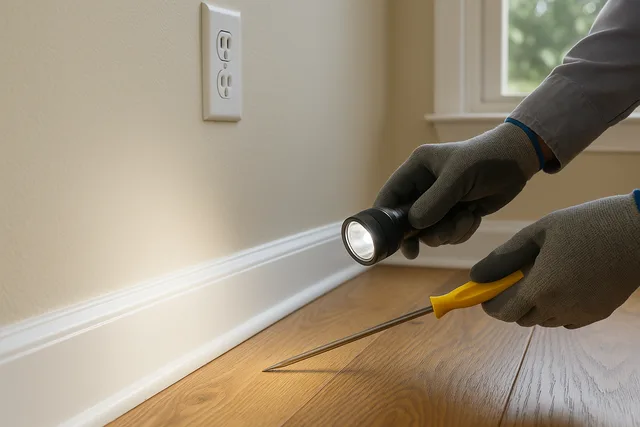
Florida homes face two termite groups: subterranean termites (including Formosan), which come up from the soil and build mud tubes, and drywood termites, which live entirely inside wood and leave pellet-like frass. Subterraneans cause the most damage and need a soil barrier; drywood is treated by injection or, if widespread, fumigation. Identifying the species is what saves thousands in repairs.
Subterranean Termites (Including Formosan)
Subterranean termites are the most destructive species in Florida. They nest in the soil and travel up into homes looking for cellulose (wood).
- Nesting: Underground — they require high moisture.
- Entry: They build mud tubes up foundations, block walls, piers, and plumbing penetrations.
- Damage pattern: Soft, hollow wood; feeding follows the grain.
- Swarm season in SWFL: Typically spring (Formosan tends to swarm late spring into summer).
- Risk level: Highest — mature colonies can be enormous, and the sandy soil and high water table in Cape Coral, Fort Myers, and Naples put them right under slab-on-grade homes.
The reliable defense is a treated soil barrier around the foundation — a termite treatment that termites pass through rather than avoid — backed by annual inspections.
Drywood Termites
Unlike subterraneans, drywood termites live entirely inside dry wood — no soil contact needed.
- Nesting: Inside furniture, trim, fascia, and attic trusses.
- Key sign: Frass — tan, pellet-like droppings pushed out of tiny kick-out holes, often piling up on windowsills or the floor below infested wood.
- Entry: Swarmers squeeze into cracks in siding, soffits, fascia, and vents.
- Swarm season in SWFL: Late summer into early fall.
When the infestation is localized, drywood termites can be treated directly with drywood termite treatment — injection, foaming, and borate wood protection — with no tent. Widespread, hidden galleries may require whole-structure fumigation.
How to Tell Which Termites You Have
A few clues settle it fast:
- Mud tubes on the foundation or block wall = subterranean termites.
- Pellets (frass) under wood trim or on the sill = drywood termites.
- Swarmers indoors with discarded wings — spring swarms point to subterranean, late-summer swarms to drywood.
Unsure? Save a sample or take clear photos — the species can be identified in minutes, and the treatment is completely different for each, which is why the inspection matters before any work is quoted.
Florida Termite Prevention Checklist
- Fix irrigation overspray and drainage around the foundation to reduce the moisture subterraneans need.
- Reduce wood-to-soil contact — fence posts, deck supports, and mulch beds against the house.
- Seal utility penetrations and foundation cracks.
- Replace water-damaged fascia, trim, or siding, which invites both types.
- Schedule an annual inspection — the cheapest insurance against a five-figure repair.
- Keep a soil-barrier or bait plan in place, especially on slab-on-grade homes near canals.
See mud tubes or piles of pellets? Book an inspection — we'll confirm the species and build a treatment and warranty plan around your home and risk level.
Frequently Asked Questions
Keep reading

Reviewed by Sun Pest Control — FL Pest Control License #JB341709, family-owned since 2011.