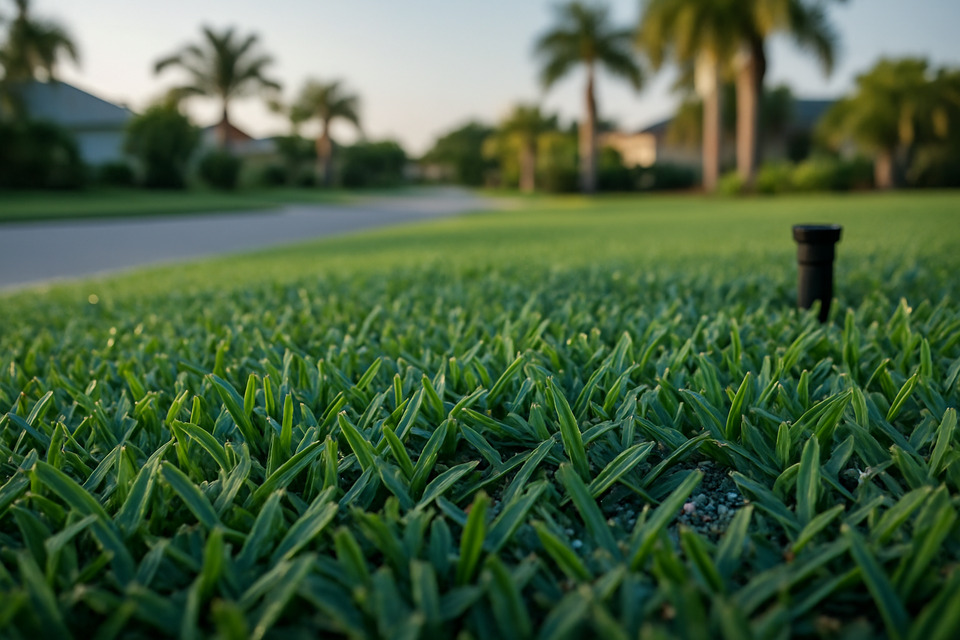
Southwest Florida’s rainy-season fertilizer blackout limits nitrogen and phosphorus to protect waterways. That doesn’t mean your Floratam St. Augustine lawn has to fade. Here’s how we keep lawns healthy during blackout — and how we boost growth once restrictions lift in October.
How We Maintain Color During Fertilizer Blackout
The goal during blackout is health without surge growth. That requires a different strategy than typical fertilization.
- Micronutrient & Iron Packages: Enhances color without pushing blade growth.
- Weed Control: Post-emergent spot treatments where permitted.
- Insect Protection: Rotations for southern chinch bug, grubworms, and sod webworm.
- Disease Prevention: Targeted fungicides based on humidity and rainfall patterns.
- Cultural Coaching: Correct watering cycles and mower height for Floratam.
When Blackout Ends (October): Our Ramp-Up Strategy
Once seasonal restrictions lift, lawns can finally receive balanced nutrients again.
- Slow-release N-P-K blends: Promotes steady, controlled growth for fall.
- Pre-emergent barrier: Blocks winter annual weeds.
- Continued disease & pest rotations: Soil moisture changes bring new pressures.
Chinch Bugs: The #1 Threat to St. Augustine
Chinch bugs thrive in hot, sunny areas — especially near concrete where heat reflects.
- Symptoms: Yellowing → browning patches that spread outward.
- Detection: Part the thatch to spot movement; float test confirms activity.
- Treatment: Rotate active ingredients to prevent resistance.
Homeowner Tips for a Healthy Floratam Lawn
- Water deeply and infrequently (~¾–1" per cycle).
- Skip irrigation after heavy rain.
- Keep mower blades sharp; remove no more than ⅓ of the leaf blade.
- Maintain proper edging — avoid burying turf with mulch.
- Protect stolons (runners) from trimmer burn.
Want a season-smart lawn program?
We treat, test, and tune your lawn based on SWFL soil, rainfall, and pest cycles —
with no surprise add-ons.