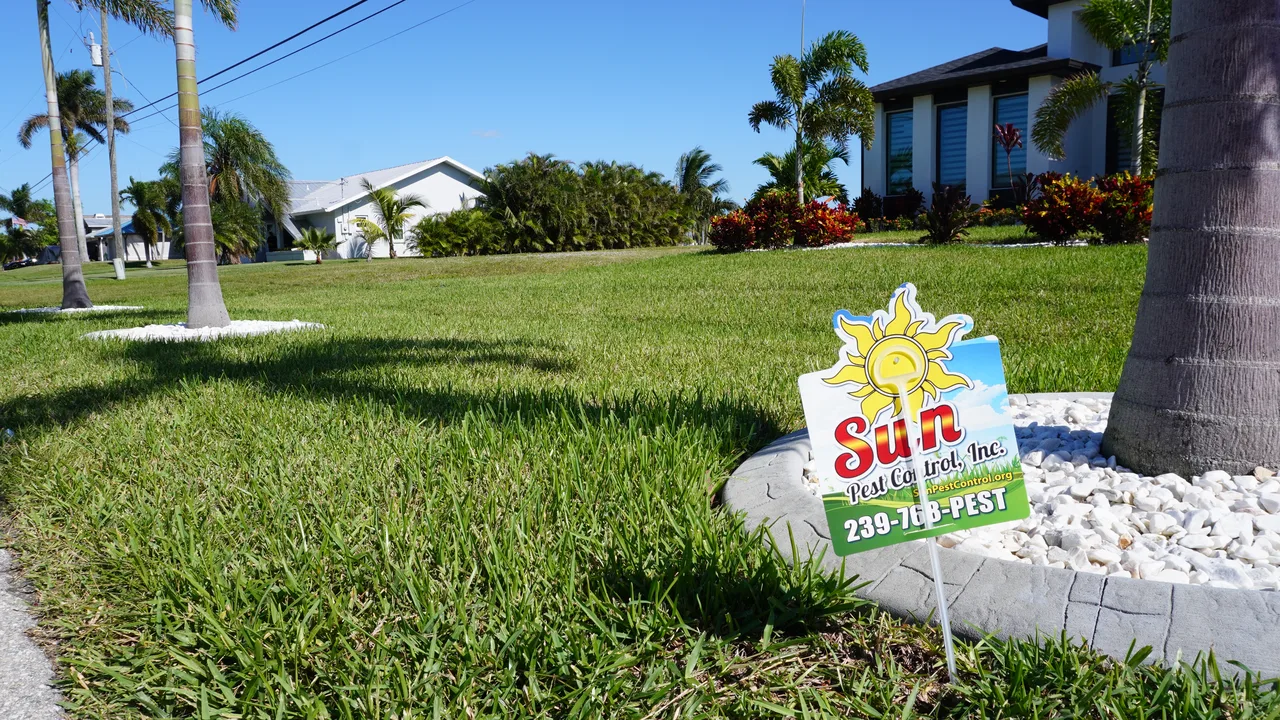
In Southwest Florida, browning St. Augustine usually comes down to three culprits: chinch bugs, watering problems (too little or too much), or fungus like brown patch or gray leaf spot. The fastest tell: where the brown shows up. Full sun near concrete points to chinch; whole-lawn or high spots point to drought; circles in humid shade point to fungus.
Start With Where the Brown Shows Up
Before you buy anything or blame the weather, walk the lawn and note the location of the damage. St. Augustine is the most common turf in Cape Coral, Fort Myers, and Naples, and it browns for a handful of predictable reasons here. Location is the single most useful clue.
Ask three questions. Is the brown in full, blazing sun and up against a driveway, sidewalk, or the south-facing wall of the house? Is it spread across the whole yard or worst on the high, dry spots the sprinklers miss? Or is it showing up as rounded patches in the shady, humid parts of the yard that stay wet? Each of those points at a different cause, and each cause has a different fix. Guess wrong and you can spend a season watering a fungus problem or fertilizing a bug problem, both of which make things worse.
Full Sun Near Concrete = Suspect Chinch Bugs
Southern chinch bugs are the number-one killer of St. Augustine in SWFL, and they love heat. The hottest, driest strips of your lawn — along the driveway, the sidewalk, the curb, and the sunny edge of the house — are where they hit first. Concrete radiates heat, dries the soil, and stresses the grass, and chinch bugs move right into that stress.
The damage looks like drought at first: yellowing that turns to straw-brown, often starting as a patch that spreads outward. The giveaway is that watering doesn't bring it back. Chinch bugs are active in our long warm season, and populations explode in the peak heat from roughly late spring through early fall.
The float test. Cut the bottom out of a coffee can or a large cup, push it an inch into the soil at the edge of a browning-but-still-green area (not the dead center — the bugs have already moved on from there), and fill it with water. Keep it topped up for five minutes. If chinch bugs are present, the small black-and-white adults and reddish nymphs float to the surface. A few is normal; a dozen or more means treat now. If you'd rather skip the coffee can, a scheduled lawn fertilization program that includes pest monitoring catches this before the brown ever shows.
Whole-Lawn or High-Spot Browning = Watering Problem
Drought stress is the most common cause people get wrong, because the fix feels counterintuitive. Under-watered St. Augustine turns a dull blue-gray before it browns, the blades fold in along the midrib, and your footprints stay pressed into the grass instead of springing back. It shows up first on the high spots, the far corners the sprinklers barely reach, and anywhere near heat-holding concrete — which is exactly why it gets confused with chinch bugs.
Overwatering causes its own brown, usually soft, thin, and mushy, and it sets the table for fungus. Frequent shallow watering is the worst of both worlds: the roots stay lazy and shallow, and the blades stay wet.
Water deeply and infrequently. Aim for about three-quarters of an inch to an inch per week total, delivered in one or two soakings rather than a little every day. Water in the early morning so the blades dry by midday. Deep, infrequent watering pushes roots down and makes the lawn far more resilient to both heat and disease. This is the backbone of any good Cape Coral lawn service and it costs nothing to correct.
Circles in Shade and Humidity = Fungus
When the brown shows up as roughly circular patches, often with a darker or yellow ring at the edge, and it's worst in the shaded, low-lying, humid parts of the yard, you're likely looking at a fungal disease. Brown patch (large patch) is the classic one on St. Augustine and thrives in our warm, wet, humid stretches — think the rainy season and the mild, damp fronts of the cooler months. Gray leaf spot is the other common one, showing up as small gray-to-brown spots on the blades during hot, rainy weather.
Fungus loves leaf wetness. Anything that keeps the grass damp — evening watering, heavy shade, poor drainage, thatch buildup, or too much quick-release nitrogen — feeds it. The tell that separates fungus from chinch bugs and drought is the shape and setting: rounded patches, shade, humidity, and often the grass pulls up easily at the edge of the circle because the crowns have rotted.
The Side-by-Side: Chinch vs. Drought vs. Fungus
Here's the same lawn, three different problems, at a glance. Match your yard to the column that fits and you'll know your next move.
| Clue | Chinch Bugs | Drought / Watering | Fungus (Brown Patch / Gray Leaf Spot) |
|---|---|---|---|
| Where it appears | Full sun, along driveways, sidewalks, curbs, sunny walls | High spots, far corners, sprinkler gaps, whole lawn | Shaded, low, humid areas that stay wet |
| Pattern of browning | Yellow-to-straw patch that spreads outward | Blue-gray, folded blades, footprints stay pressed | Rounded patches, often a dark or yellow ring |
| Time of year in SWFL | Peak heat, late spring through early fall | Dry season and hot spells; any watering lapse | Warm, wet, humid stretches; rainy season and damp fronts |
| Quick test to confirm | Float test — bugs rise to the top in 5 minutes | Soak it deeply; green returns in a few days | Check for circles, easy pull-up at the ring, morning wetness |
| Fix | Targeted insecticide + reduce heat/drought stress | Water deeply and infrequently, early morning | Fungicide, dry the blades out, cut watering and shade |
When It's More Than One Thing
Real lawns rarely read from one column. A drought-stressed strip near the driveway is the exact spot chinch bugs pile into, and an overwatered shady corner is where fungus takes hold. That's why the float test and the location check matter — they tell you which problem to treat first so you don't make the others worse. Never dump extra fertilizer on a browning lawn hoping to green it up; a hard shot of quick-release nitrogen feeds fungus and stresses grass that's already fighting bugs or heat.
If you've run the tests and still can't tell, or the brown keeps spreading after you've corrected watering, it's worth having someone walk the yard. A local crew can ID the cause in minutes and put the lawn on a program that stays ahead of all three.
Get It Diagnosed Locally
Sun Pest Control treats St. Augustine across Southwest Florida and knows exactly how these problems show up neighborhood by neighborhood — the chinch-prone driveways of Cape Coral, the humid shade pockets inland, the sprinkler gaps that brown out first. Whether you need a one-time diagnosis or ongoing coverage, we can match the treatment to the actual cause instead of guessing.
Ready for help? Get on a lawn fertilization program, or reach out about Fort Myers lawn and Naples lawn care. We'll tell you which of the three it is before we treat a thing.
Frequently Asked Questions
Keep reading
Reviewed by Sun Pest Control — FL Pest Control License #JB341709, family-owned since 2011.