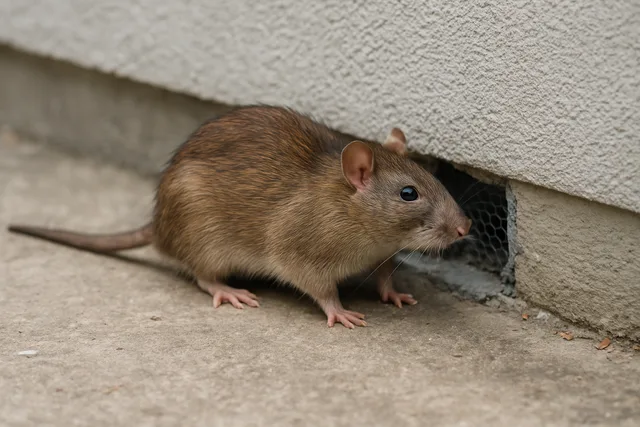
Roof rats are the common climbing rat in Southwest Florida attics. Signs include night scratching or scurrying overhead, dark droppings, gnaw marks, and greasy trails along beams. Poison alone fails because it never seals the entry points, so new rats keep coming. Exclusion plus trapping is what actually solves it.
What Roof Rats Are and Why They Love SWFL Attics
Roof rats (Rattus rattus) are the climbing rat of Southwest Florida. Unlike the ground-dwelling Norway rat, they live up high. They nest in attics, soffits, and wall voids, and they travel rooflines, overhanging tree limbs, fence tops, and utility lines to move between homes without ever touching the ground. That aerial habit is exactly why they thrive here.
In Cape Coral, canal-side tree lines give them a highway straight onto the roof. In Fort Myers, the mature oak canopy drops branches right against soffits and gutters. Tile roofs make it worse: the gaps under and between tiles, plus the open ends of barrel tile, are ready-made doorways into the attic. Once inside, a warm, dry, undisturbed attic is ideal denning space, and a single pair breeds fast. Fall is when the pressure spikes. As nights cool, rats push indoors for shelter, so this is the season homeowners start hearing them. Our rodent control & exclusion program is built around how these animals actually move.
The Signs: What Roof Rats Leave Behind
Roof rats are quiet tenants until you know what to look for. The clearest evidence:
- Droppings: dark, spindle-shaped pellets about half an inch long, pointed at the ends. You'll find them in the attic, along beams, in the garage, and around pantries or under sinks.
- Gnaw marks: rats chew constantly. Look for shredded soffit edges, chewed wiring in the attic (a real fire risk), gnawed AC line insulation, and holes in stored boxes or food packaging.
- Grease marks: as they run the same routes nightly, oils from their fur leave dark, smudged trails along rafters, wall tops, and pipe runs. These smudges are one of the most reliable ways to map their travel paths.
- Outdoor damage: roof rats love fruit. In SWFL that means hollowed-out citrus, chewed avocados, and gnawed fruit still hanging on the tree. Nipped-off fruit under a tree is a strong early warning.
Finding two or three of these together means you have an active population, not a one-off visitor.
The Sounds: Why You Hear Them at Night
The number-one call we get is "there's something in my ceiling at night." That's roof rats. They're nocturnal, so activity starts at dusk and runs through the night. What you hear is distinct:
- Scratching and gnawing as they chew nesting material and wiring.
- Scampering and scurrying — quick, light footsteps that move across the ceiling or along the wall, then stop, then move again.
- Rolling or thumping sounds as they move stored food, like acorns or fruit pits, across the attic floor.
Because they travel the rooflines, the sound often seems to move from one side of the house to another. If it's loud and only overhead at night, it's almost always roof rats rather than mice (fainter, in walls) or squirrels (daytime). Trust your ears — the timing and the height of the noise are the tell.
Why Poison Alone Fails
Most homeowners' first move is a box of bait from the hardware store. It rarely solves the problem, and it often makes things worse. Here's why poison alone falls short:
- Dead rats in your walls and attic. Poisoned rats don't leave to die — they crawl into a wall void or insulation and decompose there. The result is days to weeks of strong odor, plus flies, that you can't reach without cutting into drywall.
- No sealing means constant reinfestation. Bait might kill the rats inside today, but if the roofline gaps, vents, and pipe penetrations are still open, the next rats simply follow the same rooftop highway in. You're feeding a revolving door, not closing it.
- Bait shyness. Rats are neophobic — cautious of new objects and new food. Survivors that see others get sick will avoid the bait entirely, leaving you with a smarter, harder-to-treat population.
Poison treats a symptom. The infestation is a structural problem: your house has open doors. That's what has to change.
The Real Fix: Exclusion, Trapping, and Monitoring
Solving a roof rat problem for good takes three coordinated steps, done in the right order.
1. Exclusion (sealing the building). This is the part that actually ends the problem. We inspect the entire structure and seal every entry point a rat can use: gaps along the roofline and fascia, ridge and soffit vents, gaps under and around tile, plumbing and AC-line penetrations, gable vents, and any hole a quarter-inch or larger. On tile roofs we address the tile gaps and open barrel-tile ends that hardware-store bait ignores. We also recommend trimming tree limbs back at least three feet from the roof, since overhanging branches — common with Fort Myers oaks and Cape Coral canal-side trees — are the main bridge onto the house.
2. Trapping. With entry points sealed, we set snap traps along the grease-marked travel routes to remove the rats already inside. Trapping — not poison — lets us physically remove the animals so nothing dies in an inaccessible wall void.
3. Monitoring. We return to check traps, confirm the population is gone, and verify the seals are holding. Only after a clean monitoring window do we consider the job done.
Explore the full approach on our rodent control & exclusion page, or go straight to your area: Cape Coral rodent control, Fort Myers rodent control, and Naples rodent control.
Don't Wait Out Fall Rodent Season
Roof rats breed year-round in our climate, but fall is when they move indoors in numbers, and a small problem in September becomes a wall full of nesting by winter. Every night they're in the attic, they're chewing wiring, contaminating insulation, and dropping the next litter. The longer you wait, the more sealing and cleanup the job takes. If you're hearing scratching overhead, seeing pellet droppings, or finding chewed citrus in the yard, get an inspection now. We'll find the entry points, seal them, remove what's inside, and make sure it stays that way.
Frequently Asked Questions
Keep reading
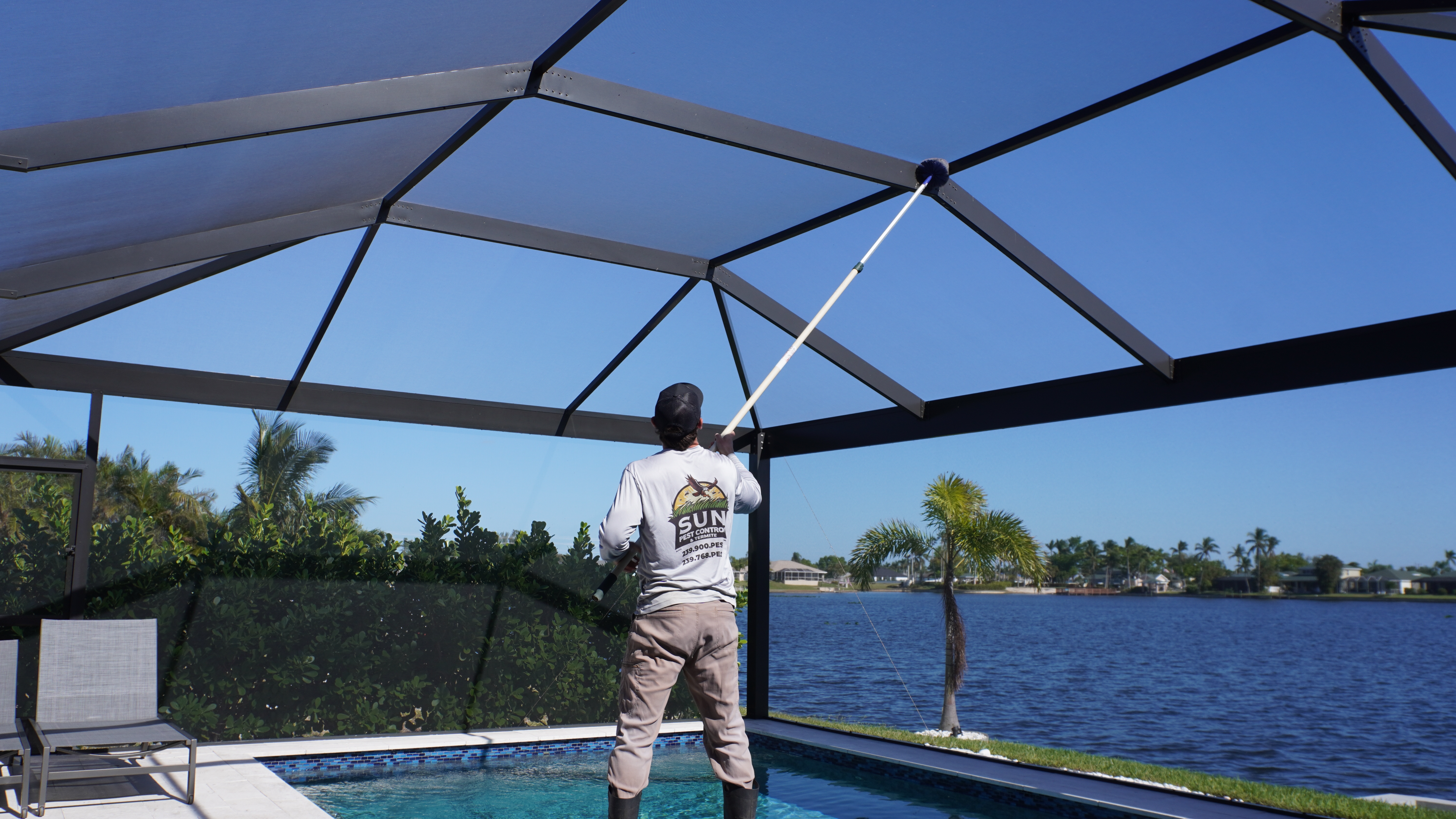
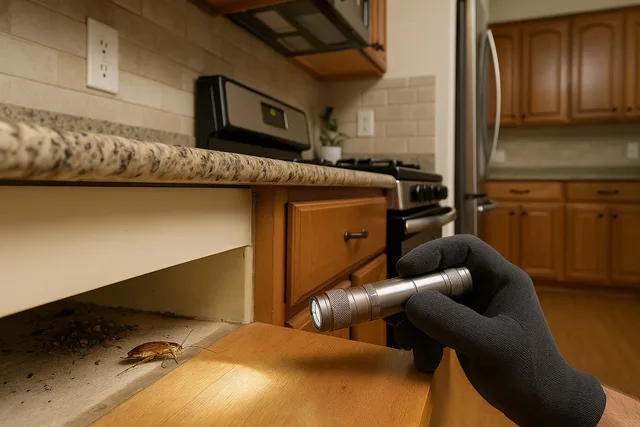

Reviewed by Sun Pest Control — FL Pest Control License #JB341709, family-owned since 2011.